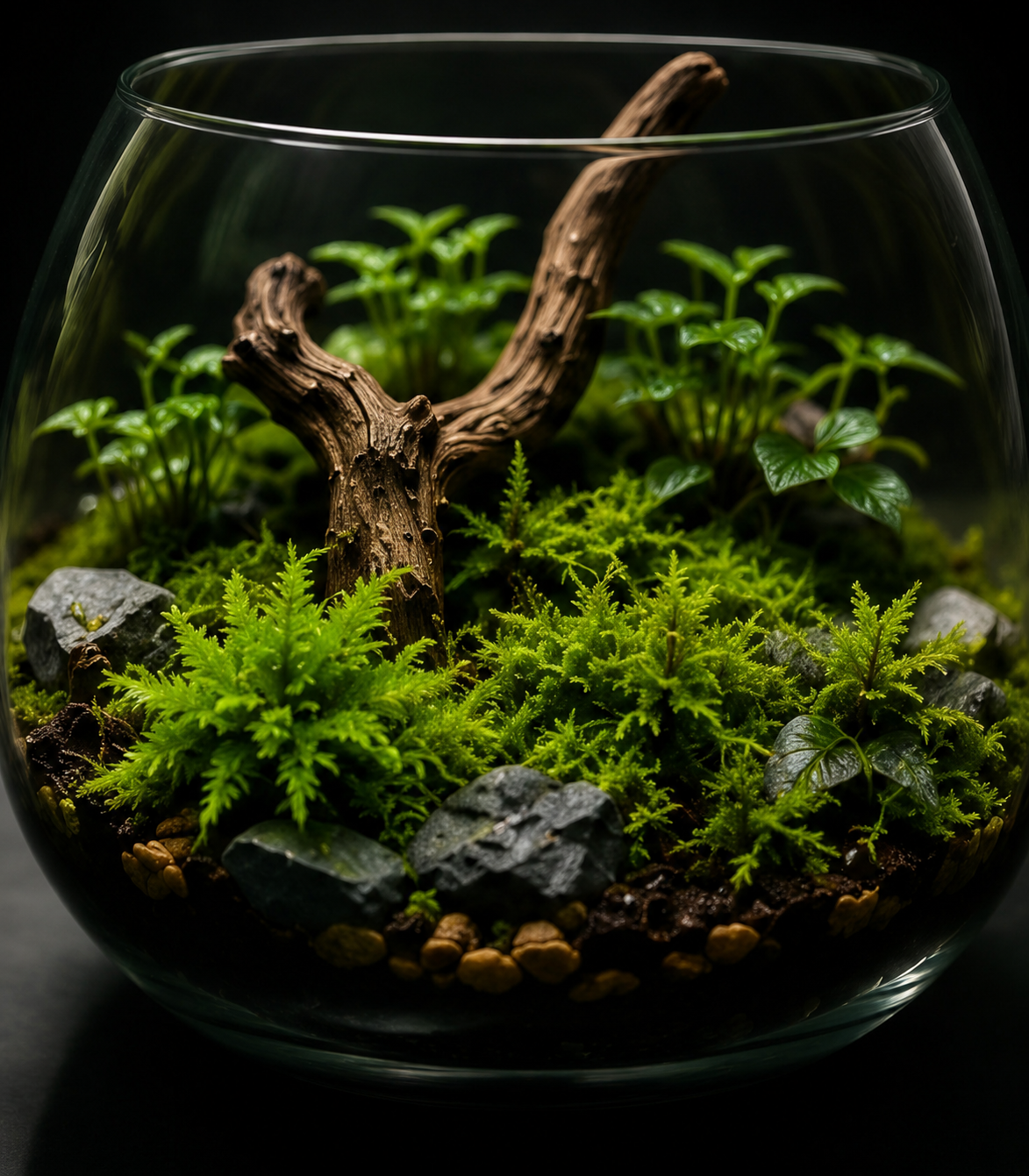
Вариант оформления композиции — фактический товар может отличаться.
Климациум древовидный «Лесной»
Редкий живой мох, который выглядит как миниатюрный лес: от ползучего побега поднимаются тонкие «стволики» с кроной. Это не стабилизированный декор — мох живой и продолжает расти.
- Что это
- Живой мох Climacium dendroides — климациум древовидный
- Контейнер
- Круглый прозрачный, диаметр около 12,5 см
- Объём
- 1 л, увеличенный объём мха
- Состояние
- Живой мох, не стабилизированный
- Уход
- Опрыскивание мягкой водой, рассеянный свет, проветривание
Пока прямой ссылки на покупку нет — мы не публикуем нерабочие ссылки.
Что входит в комплект
- · Живой мох климациум в прозрачном контейнере объёмом 1 л
- · Подготовленный влагоёмкий субстрат с дренажом
- · Природные элементы композиции: кора, камни или коряга
- · Памятка по уходу на русском языке
Доставка и упаковка
Контейнер закрывается и фиксируется в коробке с амортизацией, чтобы мох и композиция не сдвинулись в пути. Сроки и стоимость доставки зависят от региона — уточняем при заказе.
Реальное фото товара в круглой банке будет добавлено после съёмки
Кому подойдёт
Тем, кто любит лес
Композиция выглядит как участок леса в миниатюре — за ней интересно наблюдать день за днём.
Для рабочего стола и полки
Компактный размер, не требует земли и пересадок. Достаточно места с мягким светом.
Как подарок
Живой и необычный подарок вместо срезанных цветов: при нормальном уходе живёт долго.
Базовый уход
Ухаживать несложно, но мху нужен регулярный минимум внимания.
Свет
Рассеянный свет без прямого солнца. Подойдёт место рядом с окном или обычная комнатная подсветка.
Влага
Опрыскивайте мягкой отстоянной или фильтрованной водой, когда поверхность подсыхает. Мох не должен стоять в воде.
Воздух
Периодически приоткрывайте контейнер, чтобы воздух обновлялся. Это снижает риск плесени.
Температура
Комфортнее в прохладе. Не ставьте вплотную к батарее и не оставляйте на жарком подоконнике.
Выращиваем сами
Мох растёт у нас в Королёве. Реальные фотографии процесса добавим по мере съёмки — декоративные картинки вместо них мы не ставим.
Маточные куртины
Здесь будет реальное фото с производства
Подготовка субстрата
Здесь будет реальное фото с производства
Готовые контейнеры перед отправкой
Здесь будет реальное фото с производства
Частые вопросы
Это живой мох?+
Да, это живой мох. Он не стабилизированный и не сухой декор: продолжает расти и реагирует на свет, влажность и температуру.
Как поливать?+
Не поливать «под корень», а опрыскивать мягкой водой, когда поверхность подсыхает. Лишняя вода на дне контейнера вредна.
Какой нужен свет?+
Рассеянный свет. Прямые солнечные лучи через стекло перегревают мох, а полная темнота ему не подходит.
Что делать сразу после доставки?+
Аккуратно распакуйте, дайте мху постоять при комнатной температуре, слегка опрыскайте и приоткройте контейнер для проветривания. Поставьте в место без прямого солнца.
Когда появится в продаже?+
Мы готовим возобновление продаж на Ozon. Точную дату не называем — напишите нам, и мы сообщим, когда откроемся.
Для тех, кто хочет узнать больше
Ботаническая справка о виде Climacium dendroides и о том, как мы с ним работаем. Разделы раскрываются по клику.
Систематика и название+
Climacium dendroides (Hedw.) F.Weber & D.Mohr — вид листостебельных мхов семейства Climaciaceae, порядок Hypnales.
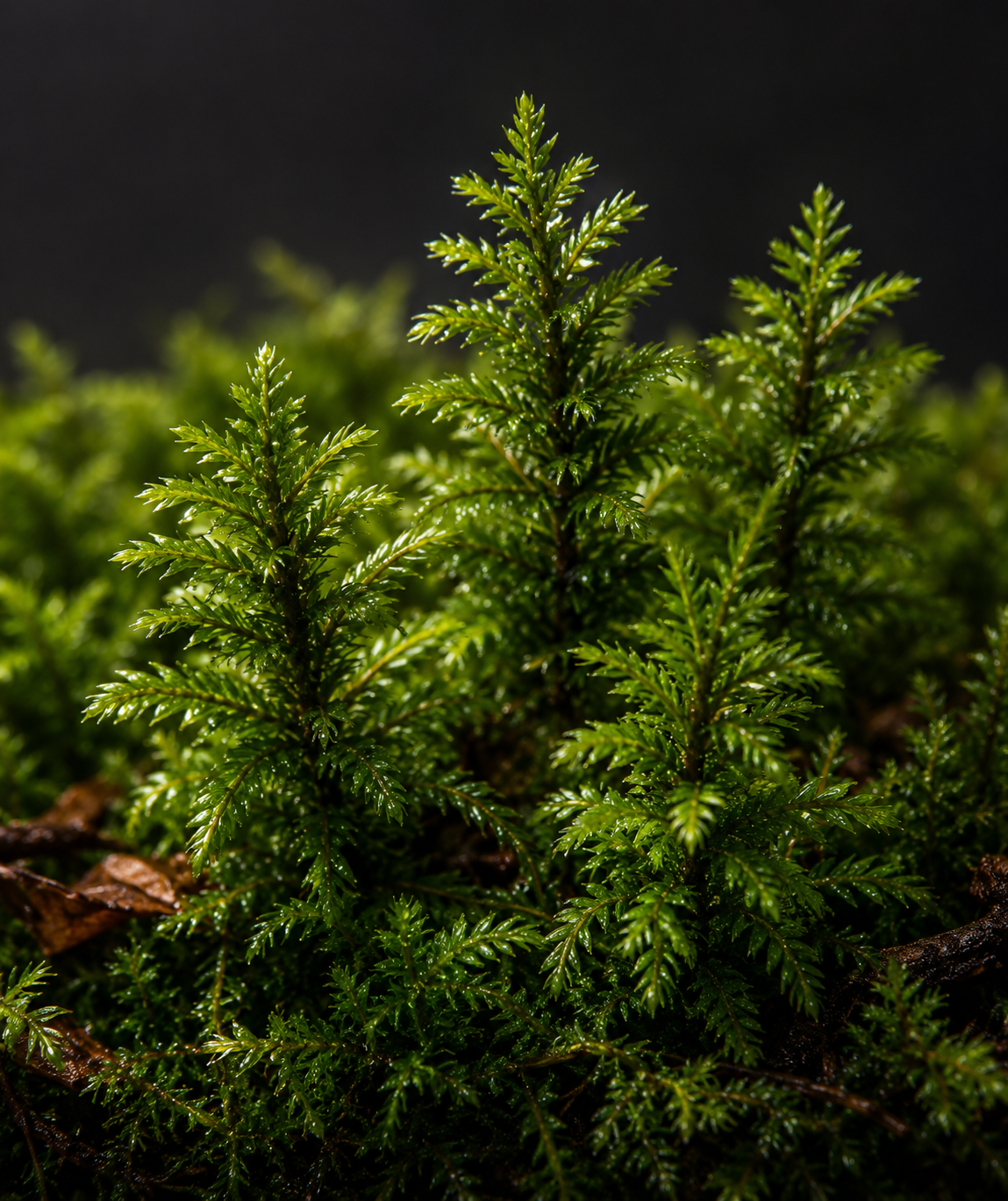
Русское название — климациум древовидный. Оно связано с формой роста: побег напоминает миниатюрное дерево со стволиком и кроной.
Морфология и строение+
От ползучего подземного побега-столона поднимается прямостоячий «ложный ствол» высотой чаще всего в несколько сантиметров.
В верхней части он ветвится, образуя раскидистую крону из густо облиственных веточек. Листья ланцетные, с зубчатым краем.
Такая трёхмерная архитектура редка среди мхов и делает вид узнаваемым в композициях.
Где растёт в природе+
Вид широко распространён в умеренной зоне Северного полушария, включая среднюю полосу России.
Предпочитает влажные луга, окраины болот, берега водоёмов, светлые сырые леса и придорожные канавы.
Хорошо переносит прохладу и сохраняет активность при низких положительных температурах.
Условия содержания+
Свет: рассеянный, умеренной интенсивности. Прямое солнце через стекло приводит к перегреву и выгоранию.
Температура: комфортный диапазон — прохладная комнатная. Жара переносится хуже, чем прохлада.
Влажность: высокая влажность воздуха при отсутствии застоя воды. Важен регулярный воздухообмен.
Субстрат: рыхлая влагоёмкая основа с хорошим дренажом; мох питается в основном через поверхность.
Вода: мягкая, с низкой минерализацией. Жёсткая вода оставляет налёт и угнетает мох.
Размножение+
В культуре основной способ — вегетативный: деление куртин и укоренение фрагментов столонов с побегами.
Фрагменты раскладывают на влажный субстрат и держат при высокой влажности до появления новых приростов.
Споровое размножение возможно, но в производственных условиях медленное и менее предсказуемое.
Основные риски+
Плесень и налёт при постоянном застое влаги и отсутствии проветривания.
Пересушивание: мох теряет тургор и цвет, восстановление занимает время и не всегда полное.
Перегрев и прямое солнце — частая причина побурения.
Жёсткая водопроводная вода — солевой налёт на листьях.
Что мы изучаем в проекте+
Подбор субстратов и режимов влажности, при которых куртины дают ровный прирост.
Влияние спектра и длительности освещения на плотность и цвет побегов.
Автоматизацию контроля микроклимата: датчики влажности и температуры, управление проветриванием.
Мы публикуем наблюдения по мере накопления данных и не выдаём предварительные результаты за окончательные.
Сообщим, когда откроются продажи
Оставьте сообщение — напишем, как только климациум снова появится в продаже.
Написать нам