Living
Terrarium Editions
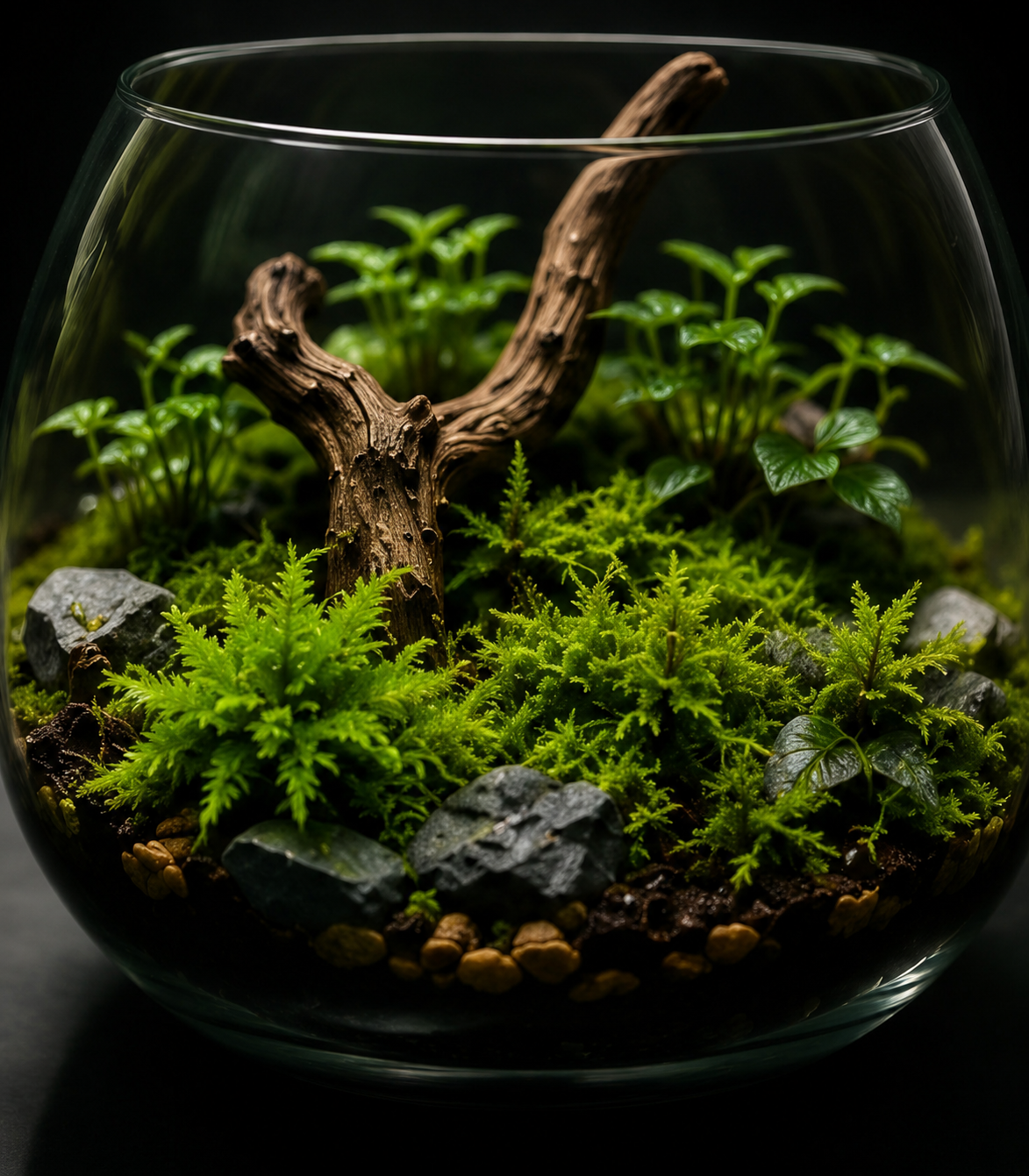
Glass compositions built around living Climacium dendroides, stone, wood and layered substrate.
Collection 01
Climacium dendroides observed as living structure, interior object and miniature landscape. A study in texture, humidity, silence and scale.
Format
Terrariums, trays, custom moss objects
Species
Climacium dendroides and companion mosses
Mood
Botanical, quiet, premium, architectural

Gallery
Botanical close-ups, tray cultivation studies and terrarium worlds — all centered on the sculptural form of Climacium dendroides.

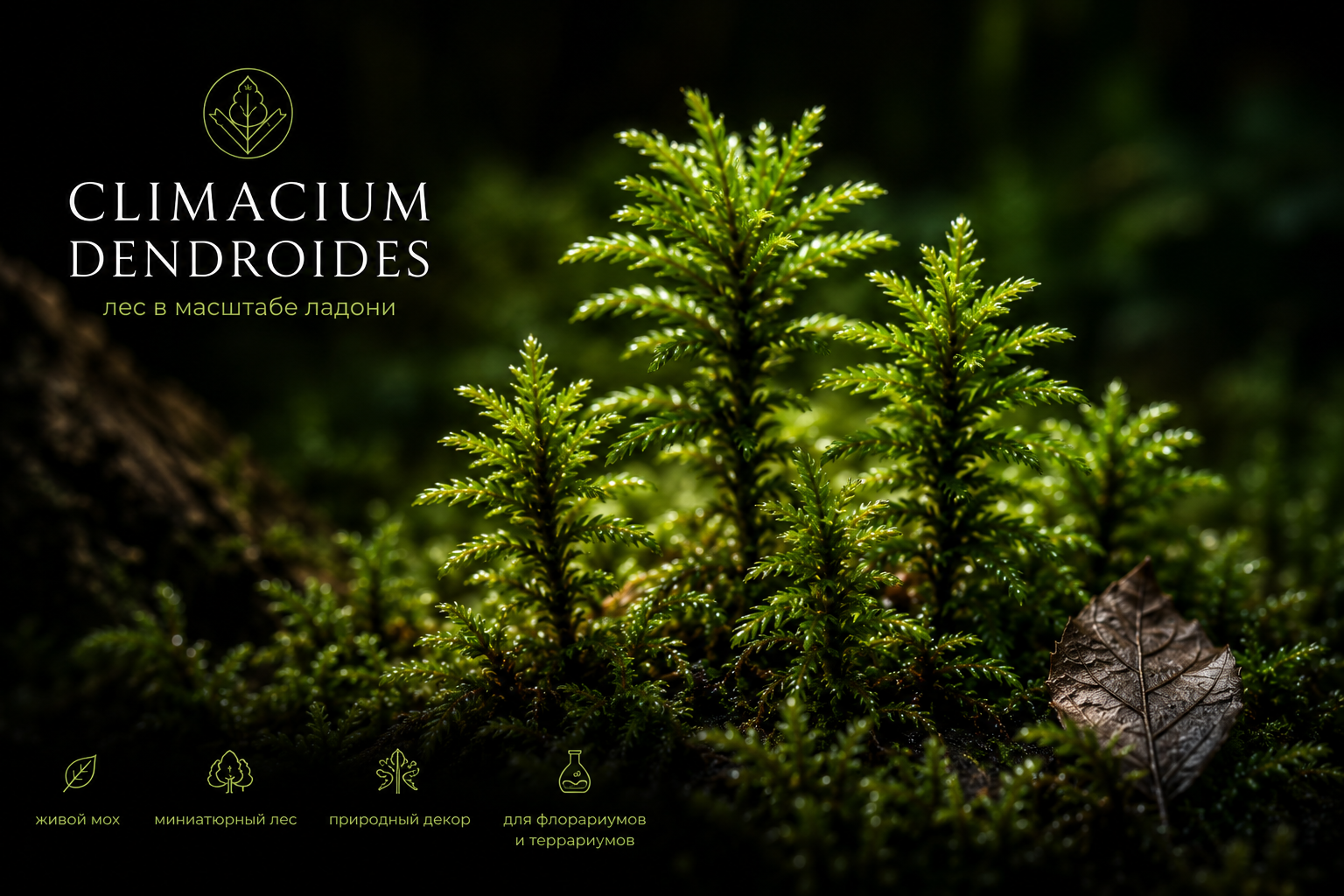
Branded botanical portrait

Living forest under glass

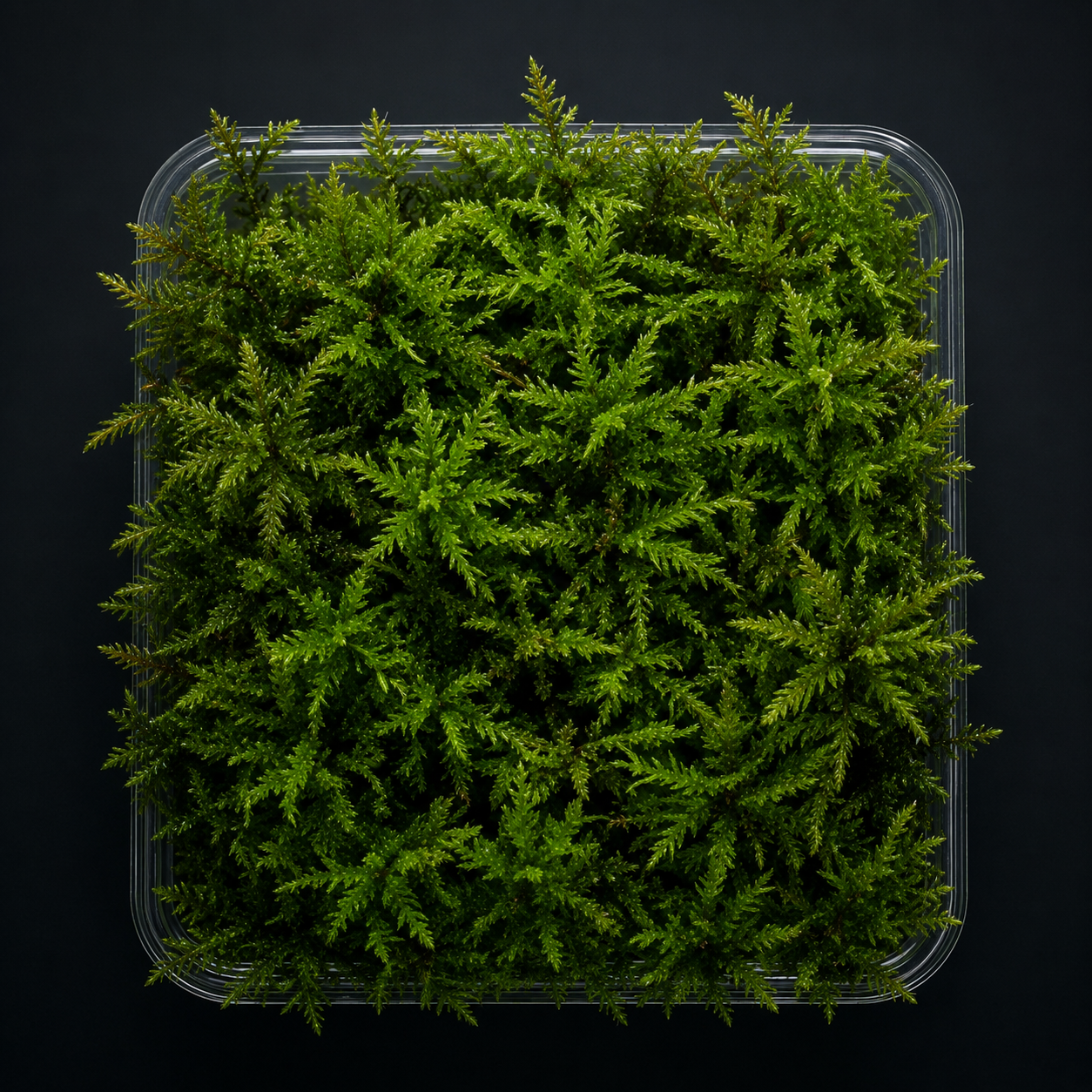
Material palette and planting density

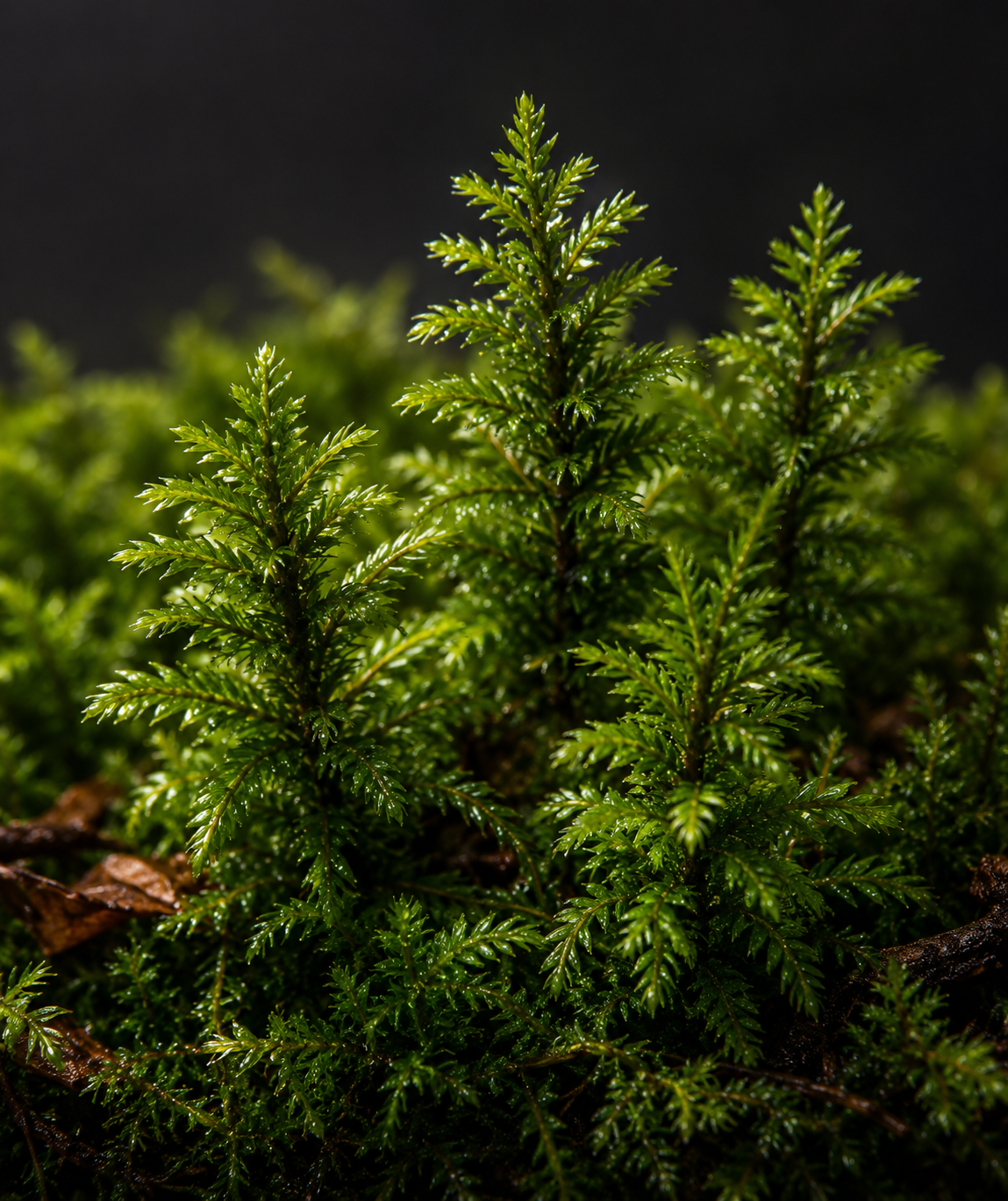
Texture, rhythm, moisture and light

Sunlit colony with branding
Products

Living
Glass compositions built around living Climacium dendroides, stone, wood and layered substrate.

Material Study
Dense tray-grown moss prepared for installation, propagation studies and future compositions.

Custom
Commissioned moss pieces for shelves, consoles and quiet architectural corners.
Scientific Dossier · v2.0
A working knowledge base behind the Neiro.Farm moss program — taxonomy, growth architecture, climate envelope, nutrition, risks and the open research program for 2026–2027.
Internal research note
Note 01
An internal water-transport system lets Climacium dendroides hold upright form and tolerate brief drying — rare among carpet mosses.
Note 02
Colonies expand through creeping stolons that send up tree-like shoots, then new stolons — the basis for any future cultivation protocol.
Note 03
Air and substrate moisture are the dominant variables. Feeding, if any, stays under 0.5 mS/cm to avoid burning the gametophyte.
Note 04
Despite a wide natural range, almost no published data exists on yield, vertical systems or in vitro scaling — the space Neiro.Farm is studying.
Growth architecture
Unlike most carpet mosses, Climacium dendroides spreads by horizontal stolons that periodically raise tree-like axes. This rhythm is the foundation of any future vegetative propagation protocol.
Stage 01
A creeping shoot extends across the substrate, establishing the colony's footprint.
Stage 02
Vertical dendroid axes rise from the stolon, forming the species' signature canopy.
Stage 03
Mature axes release fresh stolons sideways, expanding the colony.
Stage 04
Each new stolon produces its own tree-like shoots — the basis for vegetative scaling.
Water remains the dominant input — feeding stays minimal and is always tested against an unfed control.
Technological risks
Risk 01
Trichoderma, Penicillium and Mucor colonise stagnant, over-warm chambers.
Risk 02
Sealed greenhouses above 25 °C degrade the canopy within days.
Risk 03
Excess light combined with standing water shifts the surface from moss to algae.
Risk 04
Below 300 lux the dendroid form collapses into a flat carpet.
Risk 05
Constant saturation suffocates rhizoids and invites rot.
Research program · 2026–2027
Almost no commercial cultivation data exists for this species. Neiro.Farm is building the first systematic protocol — from stolon propagation to AI-managed vertical systems and unit economics.

Climacium dendroides grows like a scaled conifer canopy — upright, branching and luminous under moisture. That tree-like profile is what gives the species its extraordinary presence in small-format compositions.
On the Moss page we use close botanical photography to reveal the structure normally missed at room distance: gloss on the leaves, dense branching, tonal depth and the softness of the living ground layer.
The result is a collection language that feels closer to art direction than catalog imagery — calm, exact and rooted in real biological material.